




Today, where everything is digitalizing, every business, students, creators, and companies all need an online presence. Whenever you talk about building a website, one name that continues to lead the web industry is WordPress. But what exactly is WordPress in 2026, and why is it still so important?
WordPress was originally developed by two people:
- Matt Mullenweg (from the United States)
- Mike Little (from the United Kingdom)
WordPress was launched in 2003. Matt Mullenweg decided to improve an older blogging software called b2/cafelog, and Mike Little joined him to continue and develop the project.
Here is the first look, WordPress 1.0
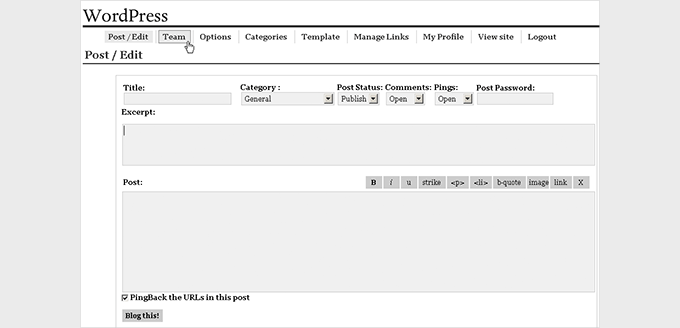
After that, WordPress became an open-source platform, and thousands of developers from around the world started contributing to it. This global collaboration helped WordPress grow into the powerful content management system(CMS) we use today.
WordPress was created because developers wanted an easy way to publish content online. Before WordPress, making a blog or website required lots of coding knowledge, which was hard for beginners. Matt Mullenweg and his team wanted a simple, flexible platform that anyone could use to share their ideas, write articles, or run a website without needing to be a coding expert. Over time, it grew into a full CMS that can build blogs, business sites, online stores, and much more.
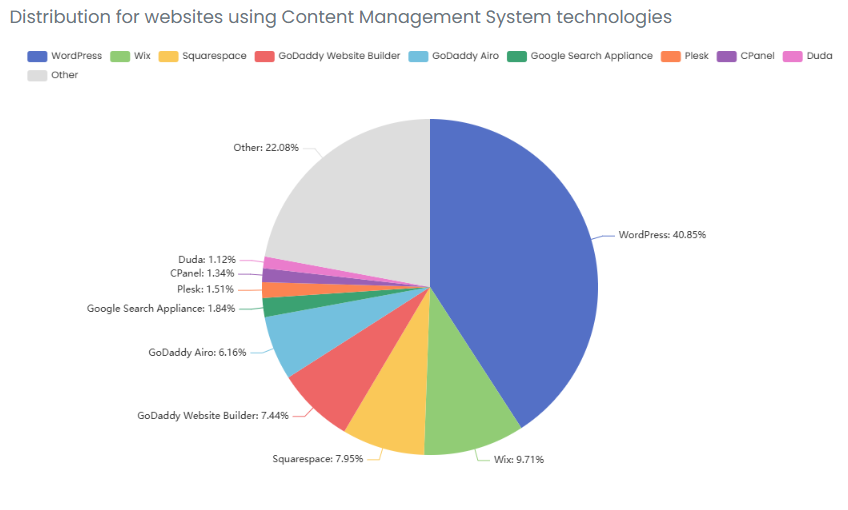
Source: BuiltWith
What is WordPress?
WordPress is a content management system, also called a CMS. WordPress is an open-source software used to create websites and blogs. Open-source means that it is free to use and anyone can use it, modify it, and improve it. Because of being Open-Source, the WordPress core is constantly updated by developers around the world.
WordPress started off as a blogging CMS, but now, you can create just about any type of website with it, be it a one-page business site, portfolio, SaaS website and even ecommerce and elearning websites. You do not need to know programming to get started. The system is designed to be user-friendly so beginners can easily manage content.
WordPress works with themes and plugins. Themes control the design of your website, while plugins add extra features. Together, they allow you to build almost any type of website you imagine. With themes and plugins, a lot of developers have written their own custom-coded features that can easily be installed on WordPress websites to extend functionality. E.g. a Contact Form Plugin to build forms with customizable fields.
Why is WordPress So Popular in 2026?
Even in 2026, WordPress remains one of the most used platforms on the internet. The reason for its success is not just history, but continuous improvement and being able to cater to various use cases to build your online web presence.
WordPress offers flexibility, control, and freedom. Unlike many website builders, it does not lock you into strict systems. You can customize your website fully based on your needs, and if you are a developer or an AI power user, you can use APIs and connect your WordPress websites with your favorite tools and even have AI Agents manage your WordPress site for you.
Some major reasons for its popularity include:
- Easy to use for beginners
- Highly customizable with limitless themes and plugins available
- SEO-friendly structure
- Large global community
- Regular updates and improvements
- Page builders that redefine the way WordPress sites are built
- Easy to incorporate with future tech
- Integrates well with frontend technologies
- Building Headless Websites
- Scalable for high traffic and large data
These strengths keep WordPress ahead in a competitive market.
What Can You Build with WordPress?
WordPress, over the past two and a half decades, has seen architectural leaps. WordPress is a limitless, API-driven foundation. While it remains highly accessible for beginners, it is primarily a scalable, enterprise-grade solution. Today, it powers:
- High-traffic digital publications (like TechCrunch and Time Magazine)
- High-volume WooCommerce storefronts handling millions in transactions
- Custom internal corporate intranets
- Headless setups running lightning-fast React frontends
- Scalable SaaS platforms and e-learning hubs
Major Leaps In Development of WordPress Core Over The Years
WordPress is not the same platform it was in 2003. It has evolved through massive architectural shifts. Here are the most significant updates that transformed WordPress into the powerhouse that currently runs over 40% of the internet:
1. The Plugin Architecture (Version 1.2 “Mingus” – 2004)
Introduction of a robust plugin system heavily utilizing hooks (Actions and Filters).
This was arguably the most important update in WordPress history. It allowed developers to extend and modify WordPress core functionality without actually touching the core code. This completely decoupled core updates from custom features, giving birth to the massive WordPress plugin ecosystem we have today.
2. The Theme System & Static Pages (Version 1.5 “Strayhorn” – 2005)
Introduction of the Theme functional architecture (breaking UI into header.php, footer.php, sidebar.php) and the ability to create static “Pages” alongside chronologically ordered blog posts.
Before this, changing the look of a WordPress site was tedious and required modifying core files. The Theme system allowed users to instantly change the design of their site. Adding “Pages” was the very first step WordPress took toward becoming a CMS rather than just a diary/blogging tool.
3. The Modern Dashboard & Auto-Updates (Version 2.7 “Coltrane” – 2008)
A complete overhaul of the admin interface (introducing the left-hand sidebar dashboard we still recognize today) and the introduction of one-click automatic core updates.
Upgrading WordPress used to require downloading a ZIP file, accessing the server via FTP, taking the site down, and manually replacing database files. One-click updates drastically improved security across the web because users could easily stay up-to-date.
4. The Transition to a True CMS (Version 3.0 “Thelonious” – 2010)
Introduction of Custom Post Types and Custom Taxonomies, plus the merging of WordPress MU (Multi-User) into the core.
This was the monumental shift where WordPress officially outgrew the “just a blog” label. Developers could now create specific data types (e.g., Products, Real Estate Listings, Portfolios, Testimonials) and categorize them custom ways. Merging Multisite also allowed users to run a network of sites from a single WordPress installation (crucial for enterprise and educational institutions).
5. The REST API Integration (Versions 4.4 to 4.7 – 2015/2016)
The inclusion of the WordPress REST API into the core.
This turned WordPress from just a monolithic application into a decoupled application framework. It allowed external applications (like iOS/Android apps, or frontend frameworks using React/Vue) to interact with the WordPress database. This birthed the era of Headless WordPress, making it a viable enterprise backend solution.
6. The Gutenberg Block Editor (Version 5.0 “Bebo” – 2018)
Replacing the classic TinyMCE rich-text editor with a fully React-based, block-driven editing interface known as Gutenberg.
This was the most controversial and fundamental rewrite of the WordPress authoring experience in its history. Instead of everything living in one massive text field, content was broken down into “Blocks” (paragraphs, images, quotes, widgets). It modernized the WordPress code stack by heavily integrating React and dramatically improved the visual editing experience for end-users.
7. Full Site Editing & Block Themes (Version 5.9 “Josephine” & Beyond – 2022)
Expanding the Gutenberg block system beyond just the content area to the entire site, including headers, footers, and sidebars.
Full Site Editing (FSE) shifted power entirely into the hands of the user. Historically, changing a header layout required knowing PHP and editing theme files. With FSE and .json-driven Block Themes, users can visually construct every single pixel of their website’s architecture directly from the browser window without writing a line of code.
8. The AI Ecosystem Explosion in WordPress (2023 – Present)
While not built directly into the WordPress Core software (yet), the third-party ecosystem has aggressively adopted Artificial Intelligence to automate site building, content creation, and management.
Historically, building a WordPress site required you to write the content, find the images, and build the layout. AI has shifted WordPress from a tool where you do all the work, into a platform where AI acts as your co-pilot. This is happening in three major ways:
AI Website Builders: Platforms like ZipWP or 10Web are allowing users to type a single text prompt (“I need a website for a local coffee shop in London”) and generating a fully-configured WordPress installation, complete with block layouts, placeholder images, and copy in under 60 seconds.
AI Within the Editor: Major page builders (like Elementor AI and Divi AI) and dedicated Gutenberg block plugins now let users generate text, write code snippets, and generate custom images without ever leaving the WordPress dashboard.
AI Agents & SEO: Plugins like RankMath are using AI to analyze content against competitors in real-time. Meanwhile, AI chatbot agents are being integrated directly into WordPress to handle customer support, book appointments, and act as 24/7 site administrators.
“As WordPress transitions into this new AI-driven era, the demands on your web server are higher than ever. AI plugins execute heavy background tasks, constant API calls to services like OpenAI, and complex database queries. You can no longer run a modern, AI-powered WordPress site on cheap shared hosting without it crashing or slowing to a crawl. To take full advantage of these new tools, you need optimized, high-performance hosting like HostWP.io to ensure your AI agents and tools run instantly and smoothly.” ~ Ahsan Parwez, Co-Founder HostWP.io
The WordPress Ecosystem in 2026 and Beyond
WordPress is not just software anymore. It has grown into a complete ecosystem. This ecosystem includes developers, designers, agencies, hosting companies, plugin creators, and digital marketers. Together, they make WordPress one of the strongest platforms on the internet.
In 2026 and beyond, the WordPress ecosystem is bigger and more advanced than ever. It is not only about themes and plugins. It now includes modern tools, AI integrations, professional services, and automation systems that make website building faster and smarter.
Themes, Plugins, and Page Builders
Themes and plugins are still the backbone of WordPress. Themes control how a website looks, while plugins add new features and functions.
There are thousands of themes and plugins available for almost every need. Whether you want an online store, booking system, membership site, or learning platform, there is a plugin for it. This flexibility keeps WordPress powerful and customizable.
However, in 2026, WordPress has moved beyond just basic themes and plugins.
Page Builders and Visual Design Tools
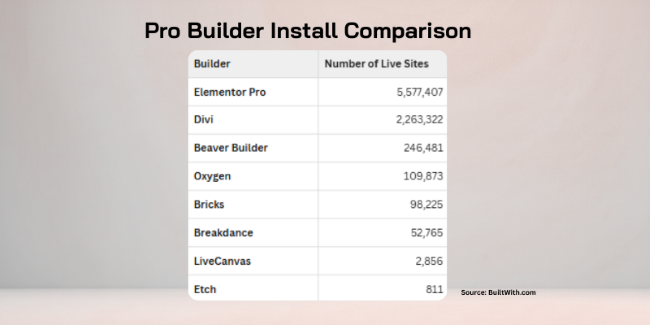
Modern WordPress users often use page builders to design websites visually. Page builders allow you to drag and drop elements without writing code.
Popular builders make it possible to design:
- Landing pages
- Business websites
- E-commerce stores
- Portfolio sites
In 2026, these builders will be more advanced and faster. They offer pre-built templates, responsive controls, and AI design suggestions. This makes website creation easier even for beginners.
WordPress and AI Integration
Artificial Intelligence is fundamentally changing how websites are built, and the WordPress ecosystem has actively, aggressively integrated AI tools. While the core software remains stable, the third-party ecosystem has shifted WordPress from a manual tool into a platform where AI acts as your rapid co-pilot.
In 2026 and beyond, AI is used in WordPress for:
- Writing content suggestions
- Generating images
- Improving SEO automatically
- Creating chatbots
- Analyzing visitor behavior
These AI integrations help website owners save time and work more efficiently. WordPress continues to grow alongside modern technology.
These AI tools help save time and increase productivity. Instead of manually doing everything, website owners can now use AI assistance.
Agentic AI and Smart Automation
The future of WordPress includes agentic AI systems. Agentic AI means AI tools that can perform tasks automatically based on goals.
For example, AI agents can:
- Monitor website performance
- Optimize images automatically
- Improve SEO based on search trends
- Answer customer questions
- Suggest design improvements
Instead of waiting for instructions, these systems act intelligently to improve websites. This makes WordPress smarter and more efficient in the future.
Using AI to Create WordPress Websites
One of the biggest changes in 2026 is AI-powered website creation. Users can now describe what type of website they want, and AI helps generate layouts, content, and design elements.
AI can assist with:
- Creating full page structures
- Writing homepage content
- Suggesting brand colors
- Generating product descriptions
- Setting up basic SEO structure
This reduces the time needed to launch a website. Beginners can create professional-looking websites much faster than before.
Advantages of Using WordPress in 2026
WordPress offers many benefits that keep it relevant.
Some important advantages are:
- Full ownership of your website
- No strict platform limitations
- Thousands of themes and plugins
- Affordable setup costs
- Flexible customization
These benefits make WordPress a smart choice for long-term projects.
Challenges WordPress Faces
Even though WordPress is dominant, it is not immune to challenges from modern, closed-source website builders (like Wix, Squarespace, or Shopify). The primary challenges include:
The Learning Curve: For total beginners, understanding hosting, themes, plugins, and the Gutenberg editor can still be overwhelming at first.
Plugin Compatibility Issues: With thousands of community developers, updates can occasionally break functionality or cause conflicts.
The Need for Regular Maintenance: WordPress is not a “set it and forget it” tool; it requires active monitoring, updates, and security hygiene.
However, with basic knowledge (or the help of a quality managed hosting partner), these challenges are highly manageable.
Is WordPress Still Worth Learning in 2026?
Yes, WordPress is still worth learning.
It remains one of the most demanded website skills in the job market. Many businesses look for WordPress developers and website managers.
Learning WordPress can open opportunities in:
- Freelancing
- Digital marketing
- Website development
- Blogging
- Online business
Its long-term stability makes it a valuable skill.
Final Thoughts
WordPress has come a long way since 2003. As we move through 2026 and beyond, the narrative is incredibly clear: WordPress is here to stay, and its rate of progress has only accelerated.
It is a powerful, flexible, open-source platform that has successfully absorbed every new technological wave from mobile responsiveness to REST APIs, and now Agentic AI. For a new CMS or proprietary system to catch up to WordPress today would take decades. The barrier to entry isn’t just writing good code; it is replicating a 20-year-old, globally entrenched ecosystem of millions of developers, agencies, plugins, and educational resources.
WordPress will remain the most reliable, dominant website platform in the world for years to come.