
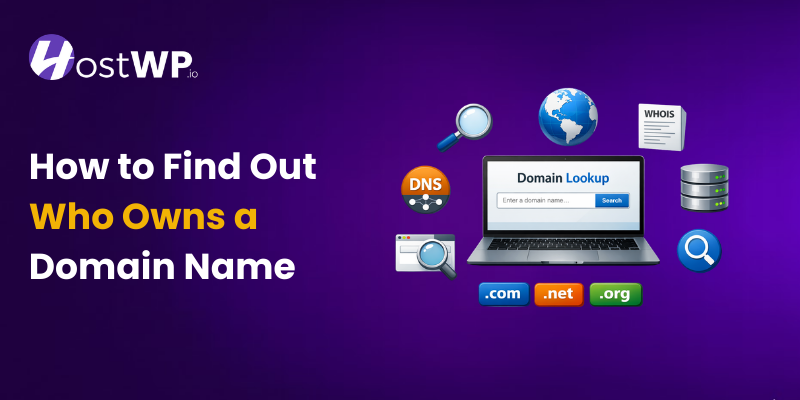


Every website on the internet is connected to a domain name. Whether you’re researching a competitor, trying to purchase a domain, investigating a suspicious website, or simply curious about who runs a particular site, knowing how to find the domain owner can be extremely useful.
However, finding domain ownership information is not always straightforward. Some domain owners make their details public, while others hide them using privacy protection services.
In this guide, you’ll learn practical, step-by-step methods to find out who owns a website domain name. We’ll cover both free and paid tools, explain how domain privacy affects results, and show you how to interpret the information you discover.
Why You Might Want to Find a Domain Owner
Before jumping into the methods, it’s helpful to understand why people often search for domain ownership information.
Common reasons include:
- Buying a domain name that is already registered
- Investigating suspicious websites or scams
- Analyzing competitors
- Checking the legitimacy of a business
- Contacting a website owner for partnerships or collaborations
For example, if you find a domain that would be perfect for your business but it’s already registered, identifying the owner is the first step toward negotiating a purchase.
Understanding Domain Ownership Information
Every registered domain is stored in a global database known as the WHOIS database.
This database usually contains:
- Domain owner name
- Organization (if registered by a company)
- Email address
- Phone number
- Domain registrar
- Registration date
- Expiration date
- Nameservers
However, due to privacy regulations and increasing concerns about personal data exposure, many registrars now offer WHOIS privacy protection. When this feature is enabled, the actual owner information is hidden and replaced with proxy contact details.
Because of this, sometimes you’ll find full information and sometimes only partial data.
Method 1: Use a WHOIS Lookup Tool (Free)

The easiest and most common way to identify a domain owner is by performing a WHOIS lookup.
A WHOIS lookup queries the public domain database and displays all available registration information.
Step 1: Visit a WHOIS lookup website
Some popular options include:
- ICANN Lookup (The official registration data lookup tool)
- Whois.com
- DomainTools
- Namecheap Whois Lookup
Step 2: Enter the domain name
Type the domain you want to investigate. For example:
example.com
Then click Search.
Step 3: Review the results
If the owner has not enabled privacy protection, you may see:
- Registrant name
- Organization
- Contact email
- Phone number
- Registrar name
- Registration and expiration dates
If privacy protection is enabled, the data will usually show something like:
- “Registrant Contact: REDACTED FOR PRIVACY”
- Privacy service email forwarding address
Even when details are hidden, the registrar and nameservers can still provide useful clues.
Method 2: Use DNSfly.net (Free)

DNSfly.net is another useful tool to analyze domain details and uncover technical information that may help identify a domain owner. It includes WHOIS lookup , DNS propagation checking across 21 global servers, SSL certificate validation, Domain age checking, and HTTP header analysis.
DNSfly also offers a fast and user-friendly interface, making it easy for beginners to quickly analyze domain data without technical complexity. No ads, no sign up requires.
It can be especially helpful for developers, marketers, and security researchers who need quick insights into a website’s back-end setup.
Step 1: Visit DNSfly.net
Go to the DNSfly website and open the domain lookup tool.
Step 2: Enter the domain name
Type the domain you want to check, for example:
Hostwp.io
Then click lookup.

Step 3: Review the results
DNSfly.net provides details such as:
- DNS records
- Nameservers
- IP address
- MX (email) records
These details can give clues about the hosting provider or organization behind the domain.
Even if WHOIS data is hidden, DNS information can still help you understand the domain’s infrastructure and ownership patterns.
Method 3: Check the Website Itself
Many website owners publicly share contact information on their website.
Before using advanced tools, check these pages:

About Page
Businesses often list:
- Company name
- Founder name
- Location
- Contact email

Contact Page
This page may contain:
- Support email
- Business email
- Phone number
- Mailing address
Website Footer
Some sites display company information in the footer such as:
- Registered company name
- Business registration number
- Copyright owner
This method is surprisingly effective, especially for legitimate businesses and blogs.
Method 4: Use Domain History Tools (Paid)

If a domain uses privacy protection, you may need a domain intelligence tool to uncover historical ownership information.
Paid tools often store older WHOIS records before privacy was enabled.
Popular domain research tools include:
- DomainTools
- WhoisXML API
- SecurityTrails
These tools can show:
- Previous owners
- Historical WHOIS data
- Domain ownership changes
- Past registrant email addresses
Example scenario
Imagine a domain owner enabled privacy protection in 2023.
A historical WHOIS database might still show the owner’s name from earlier registration records, making it possible to identify the person or organization behind the domain.
These tools are commonly used by:
- Cybersecurity researchers
- Digital marketers
- Domain investors
- Investigators
Method 5: Look Up the Domain’s DNS Records

DNS records can sometimes reveal useful ownership clues.
You can check DNS data using tools such as:
Look for the following records:
MX Records
MX records show which service handles email for the domain.
Example:
mail.companyname.com
This can reveal the business or hosting provider associated with the site.
Nameservers
Nameservers often indicate where the website is hosted.
For example:
- ns1.hostingcompany.com
- ns2.hostingcompany.com
This doesn’t directly reveal the owner, but it can provide context about the infrastructure behind the site.
Method 6: Search the Domain in Google

A simple Google search can sometimes reveal ownership information.
Try searching:
“example.com“
or
“example.com owner“
You might find:
- Social media accounts
- Business listings
- Press mentions
- Portfolio pages
For small businesses and personal blogs, this method often leads directly to the owner.
Method 7: Check Business Registries
If the website belongs to a company, you may be able to find ownership information through business databases.
Search for the brand or domain name in:
- Company registration databases
- Local business directories
Many businesses use their domain name as their company name or brand identity, which makes them easier to trace.
Method 8: Contact the Domain Registrar
If you need to reach a domain owner but their information is hidden, you can contact the domain registrar.
Registrars often provide a contact form that forwards your message to the domain owner.
Steps:
- Find the registrar using a WHOIS lookup
- Visit the registrar’s website
- Use their domain contact form
- Send your message
The registrar won’t reveal private details, but they may forward your request.
This approach is commonly used by people trying to purchase domains.
Method 9: Use Reverse IP Lookup
A reverse IP lookup shows other websites hosted on the same server.
Tools for this include:
- SecurityTrails
- DomainTools
- YouGetSignal
Sometimes you’ll discover multiple websites owned by the same person or company.
If those sites have public information, you may be able to identify the owner indirectly.
Limitations of Finding Domain Owners
While these methods work in many cases, there are situations where identifying the owner is difficult.
Common obstacles include:
Privacy Protection Services
Many registrars automatically hide personal details to comply with privacy laws like GDPR.
Proxy Registrations
Some owners register domains through proxy services that completely mask their identity.
Recently Registered Domains
New domains often have very limited historical data.
Offshore Registrations
Some domains are registered in jurisdictions where ownership information is not easily accessible.
Because of these limitations, you may not always find the exact individual behind a domain.
Tips for Contacting a Domain Owner
If your goal is to buy a domain, approaching the owner correctly can improve your chances.
Follow these guidelines:
- Keep your message short and professional
- Do not immediately reveal your maximum budget
- Ask if the domain is available for purchase
- Provide a simple contact method
Example message:
Hello,
I’m interested in the domain example.com.
Would you be open to discussing a possible sale?
Please let me know if you’re interested.
Thank you.
This approach avoids sounding overly eager while opening the conversation.
Conclusion
Finding out who owns a website domain name is often straightforward with tools like WHOIS lookup, website contact pages, or domain history databases. When privacy protection hides the details, methods like DNS checks, reverse IP lookup, and business directory searches can still provide useful clues.
If you’re researching domains because you plan to launch your own website, choosing a reliable hosting provider is equally important. HostWP offers performance-optimized WordPress hosting designed to keep websites fast, secure, and stable as they grow.